



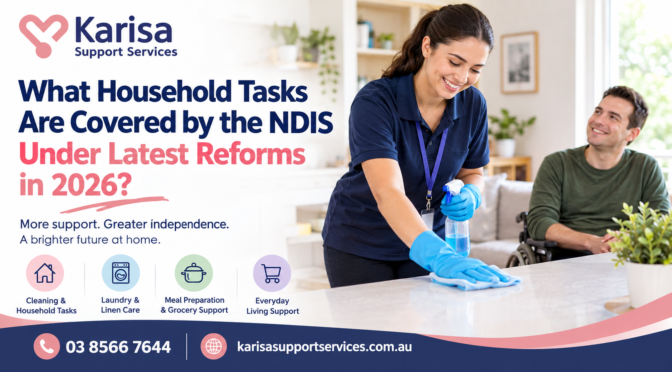
The National Disability Insurance Scheme (NDIS) has seen significant funding and planning reforms in 2026. These changes primarily reset budgets for social, economic and community participation supports and improved daily living skills supports from 1 October 2026. Importantly, essential household and daily living supports remain protected. Understanding what qualifies for funding helps participants make informed decisions about their daily living assistance. Knowing your entitlements means you can access the support you truly need.
Understanding NDIS Household Tasks in 2026
NDIS domestic assistance refers to funded support for essential household tasks. These tasks become covered when disability prevents safe completion. The NDIS only funds disability-related support, not general lifestyle services. A dedicated NDIS provider in Melbourne can explain your specific eligibility criteria.
What Tasks Are Covered?
Cleaning Services
Disability-related cleaning covers essential hygiene activities at your home. Support workers can help with bathroom cleaning and toilet maintenance. Vacuuming, mopping, and dusting fall under approved household maintenance support. A reputable NDIS service provider in Melbourne delivers these services under Core Supports.
Laundry and Bedding
Laundry support includes washing, drying, and folding your clothes. Changing bed linen is also part of approved services. These tasks are often exhausting for people with physical disabilities. Support workers help maintain clean, comfortable living spaces through linen and clothing assistance.
Meal Preparation
Meal support covers planning, shopping, cooking, and kitchen cleanup. The NDIS funds support worker time, not groceries themselves. Nutrition planning helps participants maintain health and independence. A meal preparation assistance plan supports participants with dietary needs.
Light Household Maintenance
Basic yard work and light gardening may be funded. Dishwashing assistance helps participants maintain functional kitchens. These essential household upkeep tasks prevent safety hazards. A registered NDIS provider in Melbourne can help with the assessment of your maintenance needs.
The 2026 Reforms and Key Changes
Protection of Essential Household and Daily Living Supports
Critical in-home supports — including cleaning, laundry, personal care (eating, drinking, dressing, toileting), nursing care and medication — remain protected and are not impacted by the 2026 funding resets. Household task supports continue as a Core Supports priority. Budgets for social, economic and community participation supports and improved daily living skills supports are being adjusted progressively from 1 October 2026. This protection ensures participants maintain safe, healthy living environments.
New Planning Framework
The NDIA is progressing toward a new framework for planning (with support needs assessments), which is scheduled to begin rolling out from April 2027. Supports must demonstrate clear links to disability and participant goals. Functional Capacity Assessments help determine your specific support needs. An assessment for household tasks under the NDIS in Melbourne ensures appropriate funding allocation.
Quality and Safety Standards
All NDIS providers must meet strict Code of Conduct requirements. Provider registration with the NDIS Quality and Safeguards Commission strengthens accountability. The 2026 reforms include measures that introduce clearer provider quality and participant safeguarding standards. Participants can verify their provider’s registration through official channels.
Eligibility Criteria for Household Task Funding
Your support must be directly related to your disability. The NDIS considers whether tasks are reasonable and necessary. Support must align with your personal goals and NDIS plan. Every participant’s situation is different and requires individual assessment.
A support plan should address tasks currently neglected due to disability. Physical limitations, safety concerns, or cognitive difficulties all qualify. The NDIA examines how your disability specifically impacts each task. Evidence from medical professionals strengthens your funding application.
How Domestic Support Services in Melbourne Work
Support workers develop personalised plans based on your unique needs. Regular communication ensures services align with your changing circumstances. Workers respect your preferences, independence, and personal choices. Participant feedback shapes ongoing support adjustments and improvements.
Flexible scheduling means support fits around your daily routine. Most participants arrange regular weekly or fortnightly appointments. Support is person-centred and focused on maintaining your independence. Many participants gradually build confidence to complete tasks independently.
The Reasonable and Necessary Test
The NDIA applies a clear three-part test for all supports.
- First, support must relate directly to your disability.
- Second, support must be reasonable given your circumstances.
- Third, support must be necessary to achieve your goals.
Household tasks pass this test when disability prevents safe completion. Essential domestic activities qualify more readily than optional services. Your NDIS plan should clearly document this reasoning. Understanding this test helps participants prepare for plan reviews.
Moving Forward in 2026 and Beyond
Take action by reviewing your current NDIS plan carefully. Identify household tasks causing stress or safety concerns. Document how your disability impacts each specific activity. Gather evidence from healthcare providers and support workers.
The 2026 reforms protect essential household and daily living supports while adjusting other categories. Planning meetings increasingly focus on meaningful outcomes and independence. Working with experienced providers improves your chances of securing funding. Regular reviews ensure your support remains appropriate and effective.
Conclusion
Understanding your rights under the 2026 NDIS reforms empowers better decision-making. Household task support remains a cornerstone of participant independence. Clear protections for critical supports benefit all participants. If navigating these changes feels overwhelming, seek professional guidance right away.
Contact Karisa Support Services today for expert assistance with your household support needs. Our experienced team understands the latest 2026 NDIS requirements thoroughly. We provide personalised guidance tailored to your unique circumstances. Call us on 03 8566 7644 or email admin@karisasupportservices.com.au for a confidential consultation. Visit https://karisasupportservices.com.au/ to learn more about services available.
Frequently Asked Questions
1. What household tasks does NDIS cover under 2026 reforms?
NDIS covers essential household tasks like cleaning, laundry, meal preparation, and light maintenance when disability prevents safe completion. All covered tasks must be reasonable, necessary, and directly related to your disability within Core Supports funding. These essential supports remain protected under the 2026 funding changes.
2. Is cleaning covered by NDIS in 2026?
Yes, essential cleaning including bathrooms, kitchens, and general vacuuming is covered if your disability makes these tasks unsafe or impossible. NDIS focuses on functional cleanliness necessary for health and safety, not aesthetic cleaning services. Cleaning remains unaffected by the 2026 budget resets.
3. Can NDIS pay for laundry and bedding assistance?
Absolutely, laundry and changing bed linen are approved household tasks under NDIS. This support is particularly valuable for participants with physical disabilities affecting their ability to lift, bend, or use washing machines safely. Laundry is explicitly protected as an essential day-to-day support.
4. How much meal preparation support can NDIS fund?
NDIS funds support worker time for meal planning, shopping, cooking, and kitchen cleanup through Core Supports. The scheme funds the support worker’s assistance, not the cost of groceries or ingredients themselves.
5. Do I need to prove my disability affects household tasks?
Yes, you need evidence showing how your disability specifically impacts each household task you’re requesting funding for. Healthcare provider statements and functional capacity assessments strengthen your eligibility application significantly.
6. Are all NDIS providers registered to deliver household task support?
Not all providers automatically offer household task services, but many do under Core Supports. You should verify your chosen provider’s registration and qualifications with the NDIS Quality and Safeguards Commission.
7. Can NDIS fund yard work and light gardening?
Light yard work and basic gardening are potentially covered if directly related to your disability and included in your plan. Heavy landscaping or major garden renovations typically aren’t covered under NDIS funding.
8. What’s the difference between household tasks and personal care?
Household tasks focus on maintaining your home (cleaning, laundry), while personal care involves your body (showering, dressing). Many participants access funding for both categories under their Core Supports budget.
9. How often can I use NDIS household task support?
The frequency depends entirely on your individual NDIS plan and assessed needs. Some participants receive weekly support while others use services fortnightly based on their circumstances and goals.
10. What should I do if my household task funding application is refused?
You can request the NDIA to explain their decision and provide written reasons. Consider providing additional medical evidence or working with an NDIS advocate to strengthen your case for plan review or formal appeal.


